Offloader Knee Brace - Frequently Asked Questions

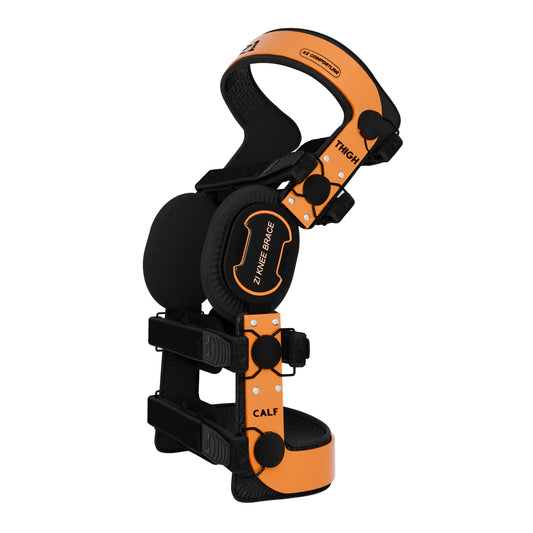
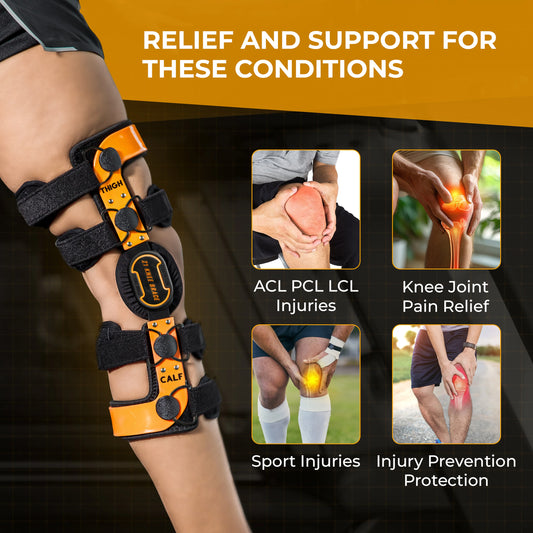
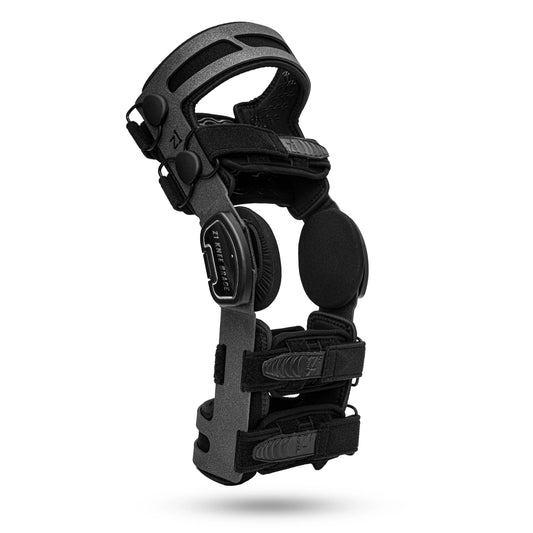
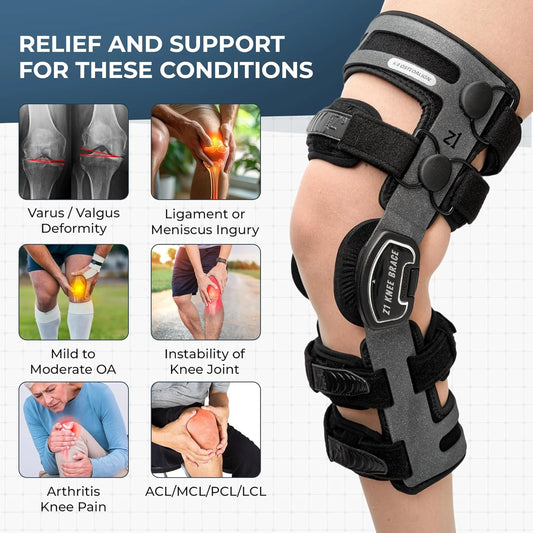
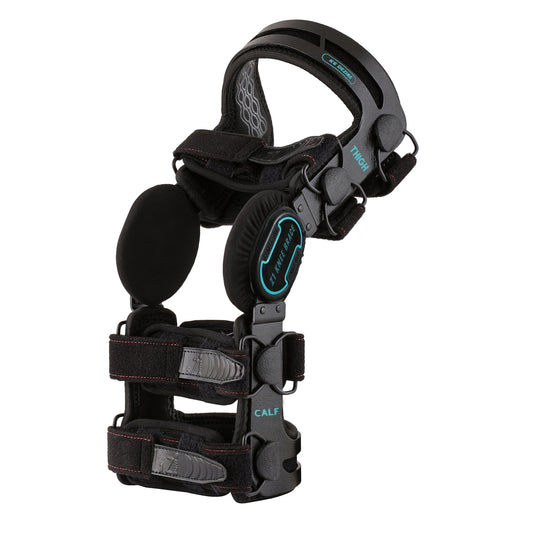
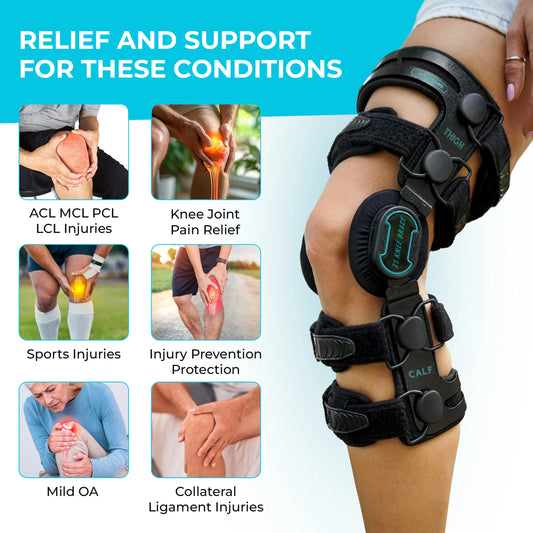
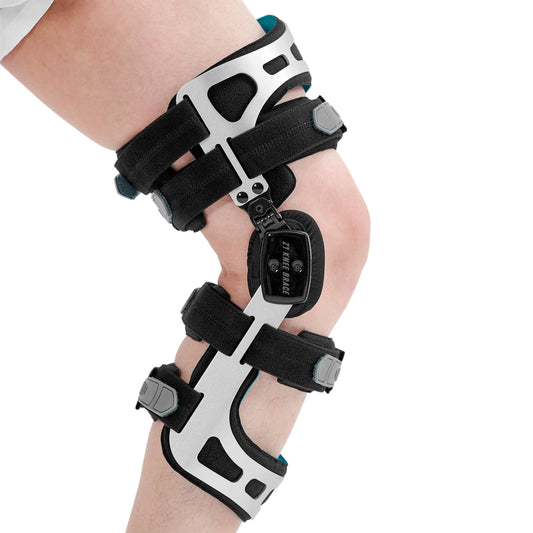
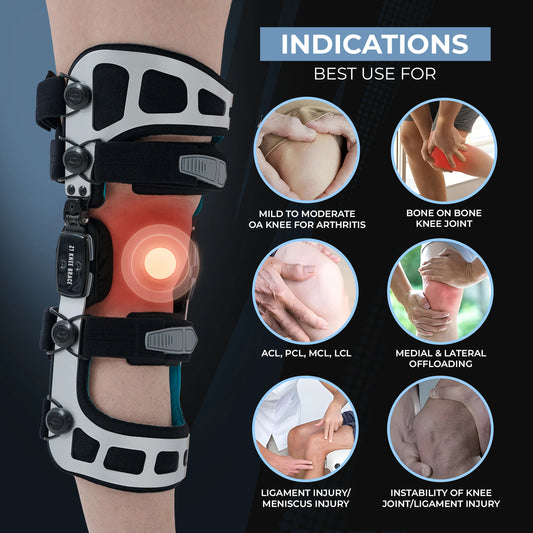
An offloader knee brace is a specially designed orthopedic brace which reduces pressure on the damaged side of the knee joint. It is really helpful in the unicompartmental knee osteoarthritis. An offloader knee brace is specially designed to adjust the weight distribution across the knee. They play an important role in reducing the symptoms of knee pain and inviting more quality of life.
This FAQ guide is for answering the most common questions people have about offloader knee brace and its uses. If you are interested in exploring the non-surgical alternatives for managing knee pain and osteoarthritis alike problems, this guide explains the clear information how these braces work and what to expect.
The following FAQs address common concerns & offer clear, practical answers to help you use the brace with great confidence. Let’s explore one by one -
Can an offloader knee brace help with medial and lateral knee osteoarthritis?
An offloader knee brace can definitely help in both medial and lateral knee osteoarthritis. It depends on which side of the compartment of the knee this brace is designed for. Most offloader knee braces are designed for medial side (inner side of the knee) osteoarthritis. However, there are also braces to handle lateral side (outer side of the knee) osteoarthritis.An offloader knee brace is completely capable of improving mobility and knee pain reduction. These braces don’t reverse the cartilage damage. A properly fitted offloader knee brace is the key to get long term comfort in any kind of osteoarthritis.
Does body weight affect the performance of an offloader knee brace?
The knee of your body carries weight during many physical activities which can place the extra pressure on the knee joint. Yes, body weight can influence the performance of the offloader knee brace. As your body weight increases, the pressure on the knee joint also increases. The offloader brace can still provide the benefits and relief but it can’t offset the additional stress.The other performance indicators are also responsible for deciding the performance of offloader knee brace like - proper sizing, correct fitting, consistent use of brace, the severity level of osteoarthritis, low-impact exercise, physiotherapy, and proper medical guidance.
How long does it take to get used to wearing an offloader knee brace?
The time to get used to wearing an offloader knee brace depends on the person and it always changes from person to person. Generally, it takes 1-2 weeks to get used to it. When you first start to wear an offloader knee brace, your knee feels different. Your movement style can also temporarily change. Some users may also feel the discomfort, mild pressure around straps, or the feeling of stiffness during the first few days.When you start wearing the brace, you should start with the short period and gradually increase the time of wearing the brace. Your muscles, joints, & skin get used to the brace for regular use.
How many hours a day should you wear an offloader knee brace?
The number of hours is not fixed as the situation of the individuals always differs. You should start with the fewer number of hours in the initial days of wearing the knee brace, but with the passing of time when your knee and muscles start responding to it, you can increase the number of hours of wearing the offloader knee brace.In most cases, the brace is worn when you perform the physical activities that put pressure on the knee. It is not recommended to wear during sleeping hours or resting unless it is not advised by a healthcare professional.
Can you exercise while wearing an offloader knee brace?
Yes, you can exercise while wearing an offloader knee brace. But it should be noted that the activity is appropriate for your condition and approved by your healthcare professional. The brace is especially useful for those lightweight exercises that put controlled pressure on your knee joint.Best exercises to do when wearing an offloader brace -
- Walking on level ground
- Stationary cycling
- Leg strengthening exercises
- Balance and flexibility exercises
Does an offloader knee brace replace the need for surgery?
An offloader knee brace doesn’t replace the need for knee replacement surgery. It can only delay the need for surgical treatment. An offloader brace does not replace the damaged cartilage or reverse the growth rate of osteoarthritis. If your osteoarthritis becomes severe enough that it stops your daily routine activities then surgery is the best option.It is important to understand that the brace is designed to manage symptoms but not to remove the problem of osteoarthritis fully. Stop wearing your knee brace if your condition worsens and the mobility declines in spite of all kinds of conservative treatments.
How should you clean and maintain an offloader knee brace?
Before you clean your offloader knee brace, just read the manufacturer’s instructions carefully. Remember that different offloader braces have different cleaning requirements. If your brace has removable pads, straps and liners, you need to detach them before cleaning.Avoid harsh chemical, bleach, & fabric softeners to remove the brace. After cleaning your knee brace, just lay your components in a ventilated area and allow them to get dry before reassembling.
When should you replace an offloader knee brace?
An offloader knee brace is designed to provide you long-term support in knee osteoarthritis. But like any medical device, offloader knee brace will also wear out and lose its effectiveness. In the following conditions you can identify that you need to replace the offloader knee brace -- If your brace suddenly slips, loosens and no longer stays in the correct position, it does not provide the necessary offloading.
- Straps and velcro fasteners naturally lose their grip all over the time. Replace your brace if your straps are torn.
- With the passing of time, the padding of the brace can be torn and flattened. It needs replacement at that time.
- The rigid frames and hinges of the brace are essential for unloading the pressure. Cracks and venting in these components can cause for replacing the offloader knee brace.
How do you choose the right size offloader knee brace?
Selecting the right size offloader knee brace is necessary for effective pain relief of your knee. Many manufacturers provide the size chart based on specific body measurements. They include the thigh, calf, and knee circumference. Take the measure of these parts correctly. Offloader braces are also available for one side of the knee.For people having mild to moderate knee osteoarthritis, they should consult a certified orthopedic specialist to get the correct size of the offloader knee brace before buying it.
What should you expect during the first week of wearing an offloader knee brace?
The first week of an offloader knee brace is an adjustment period for your knee. You may experience a slight discomfort, changes in your walking pattern, temporary skin redness and swelling. Wearing the brace consistently, ensuring a proper fit, and following your healthcare provider's guidance can make the offloader brace suitable for you in the long run.In the first week of use, the offloader knee brace changes how weight is distributed across your joint. During this period your knee, muscles, and ligaments are getting used to the brace.
Is an offloader knee brace suitable for everyday activities?
Yes, an offloader knee brace is suitable for performing routine activities. These braces are made with lightweight frames, adjustable hinges, & padding to make it comfortable for extended use. You can perform the following activities by wearing offloader knee brace like - walking around home or workplace, climbing & descending stairs, standing for a longer period, light household chores etc.It is advisable for you to avoid such activities which are related to playing high impact sports, running on uneven terrain, heavy lifting without proper guidance, twisting or pivotal movements etc.
Are offloader knee braces adjustable?
Most offloader knee braces are adjustable in nature, which is their biggest advantage. Offloader braces are designed to provide a customized fit & apply controlled pressure to shift weight from the damaged part of the knee. You can adjust the straps yourself for everyday comfort and if your offloader brace has unloading settings then you can consult with a healthcare professional also.Proper adjustment enhances the brace ability to reduce pain, improve stability, & support your daily activities. For getting the best results, please read the manufacturer’s instructions provided with your brace.
Can an offloader knee brace be worn under clothing?
Yes, an offloader knee brace can be worn under clothing. The design of the brace and the types of your clothes decide the comfort level of your brace. Loose-fitting pants or trousers, straight-leg or wide-leg jeans, joggers, sweatpants, and athletic pants are good choices to wear.Many healthcare providers recommend wearing the brace directly against the skin, or over a moisture-wicking sleeve. Thick clothing between the brace and your skin can sometimes reduce the grip by the brace.
Can you wear an offloader knee brace while driving?
Yes, you can wear an offloader knee brace while driving your vehicle. An offloader knee brace has rigid frames and hinges that can slightly limit the knee bending which is very helpful while driving a car or other vehicle. In the cars, the offloader knee brace for left knee does not impact driving wherever the offloader knee brace for right knee impacts your driving pattern.If your brace is causing the restriction for your movement or slows your response time, then you should not wear the offloader brace while driving.
Can you sleep while wearing an offloader knee brace?
You should not wear the offloader knee brace while sleeping unless your doctor prescribes you to do so. When you are asleep, your knee is going to support the body weight so the brace is not needed at that time. Wearing it overnight can increase the skin irritation, getting restful sleep, stiffness, and redness.For most individuals, offloader knee braces are intended for weight-bearing activities, not for sleeping purposes.
Final Thoughts -
An offloader knee brace is a non-surgical orthopedic solution for those individuals who are dealing with unicompartmental knee osteoarthritis. As covered in this FAQ guide, a correct offloader knee brace can reduce pain, improve mobility and knee stability, and make everyday activities more comfortable.An offloader knee brace is a permanent cure for knee osteoarthritis, but with the proper comprehensive treatment plan you can get the maximum effectiveness and your overall comfort. Understanding how to use, clean, & maintaining the brace can also increase the effect of the offloader knee brace.
Dealing and suffering with knee pain does not mean that you should not perform everyday activities. An offloader knee brace provides you the real and extreme benefits if you use it correctly and have realistic expectations.
To buy effective & more comfortable offloader knee braces from z1kneebrace, please visit - https://z1kneebrace.com/collections/oa-knee-brace