Knee Brace for Arthritis - Frequently Asked Questions

Dealing with arthritis can become a difficulty for performing your daily activities. As knee stability reduces and pain, stiffness alike problems increase, most people consider it necessary to buy knee brace for arthritis so that they can make their movement pattern more easy and comfortable.
Many individuals think whether a knee brace is actually helpful in reducing the arthritis pain, whether it should be worn throughout the day, & how tight it should feel. To understand these practical considerations for you make it easy to use knee braces for arthritis more effectively & efficiently.
In this FAQ guide, we will answer some of the most practical questions about using knee braces for arthritis. These answers will help you to choose the right support for your needs.
Here are answers to some of the most frequently asked questions about knee braces and arthritis.
What type of knee brace is best for arthritis?
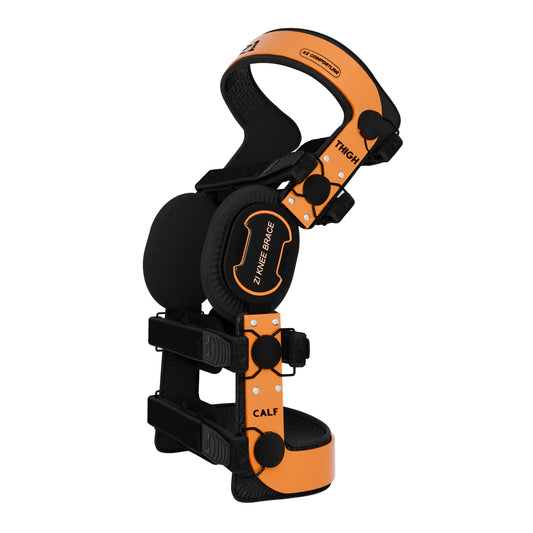
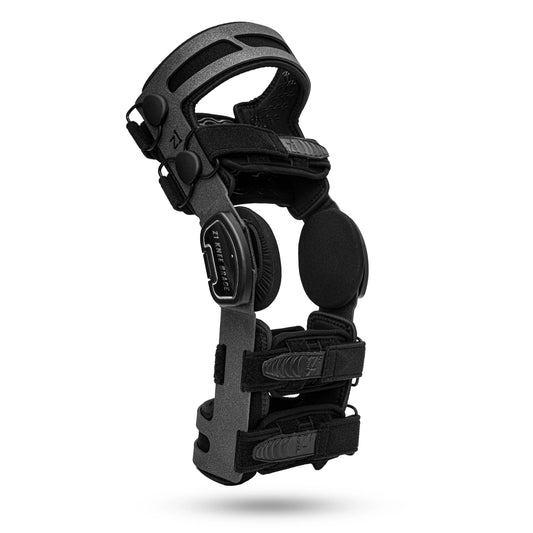
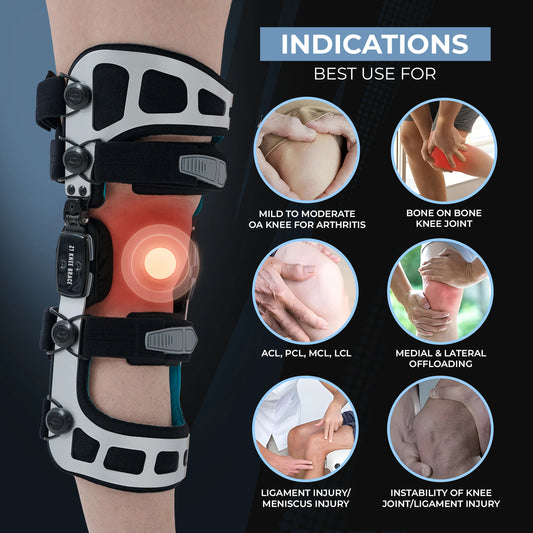
The best type of knee brace depends on the severity and location of arthritis and your activity level. The right knee brace should fit on your knee and match your specific knee problem. For example - An offloader or unloader knee brace is needed in unicompartmental knee osteoarthritis. If your arthritis is followed by weakness or instability, a hinged knee brace can provide better stability.
Some other factors should also be considered while choosing a knee brace like - adjustability, fitting, affected compartment, & the time of wearing. If you have specific arthritis, you need to consult with the healthcare professional.
Can wearing a knee brace change the way you walk with arthritis?
In the condition of arthritis, sometimes a knee brace can change the way of walking for you. A properly fitted knee brace offers more stability and comfort, which makes walking more natural & less painful. The positive effect of the knee brace depends on the type of brace and type of arthritis.
A knee brace should not make your walking pattern worse. If you are more limping, restricted in walking, losing balance, or feel more pain while wearing the brace, it may not be fitted or positioned correctly. Adjusting the straps or choosing a different brace design can benefit you more.
Why does a knee brace sometimes feel uncomfortable even when it fits correctly?
A knee brace sometimes feels so uncomfortable even when it is correct in fit because your knee takes some time to adjust to the design and structure of the knee brace. This is common with hinged, rigid or metal knee braces.
Another reason can be pressure distribution. A brace may put extra pressure on your kneecap, sides and back of the leg. Sweating, swelling, friction, & wearing it for too long can cause irritation. Numbness, tingling, swelling and discoloration of skin may need adjustment for your knee condition.
What should you do if your knee brace leaves marks on your skin?
A knee brace can leave marks on your skin because of the pressure from the straps, hinges, padding or frame. Light marks are not harmful if they disappear after removing the knee brace. If the marks are deep, painful, or remain for a long period, your brace is definitely putting excessive pressure.
You can start by checking the strap tension and brace positioning. The brace should not feel so tight and its straps should not dig into the skin. If the marks convert into deep redness, swelling, broken skin, just remove the brace and allow your skin to recover.
Can you exercise while wearing a knee brace for arthritis?
Yes, you can exercise while wearing a knee brace for arthritis. It depends on your condition and it must not be rejected by your doctor. A knee brace provides additional support & stability during activities like - walking, cycling, & strength exercises. You need to start with low-impact exercises and check how your knee responds.
A knee brace can support the knee but it can’t replace exercise, physical therapy, & treatment for arthritis. If you have specific types of arthritis symptoms, please consult your healthcare professional about the type of exercises and knee brace as well.
Does body weight affect the fit and performance of your knee brace for arthritis?
Yes, your body weight can impact the fit & functionality of your brace for arthritis. Change in body size can affect the circumference of your thigh and calf. It may change how securely your brace stays in its position. It is important to choose a brace based on accurate measurement & the size guide.
If your body size and weight have changed significantly, it is necessary to recheck the brace fit and adjust the straps. The brace should fit securely without putting extra pressure.
Is a hinged knee brace suitable for arthritis?
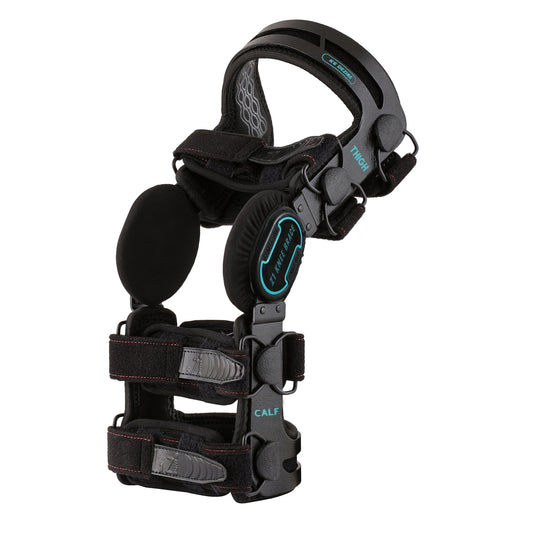
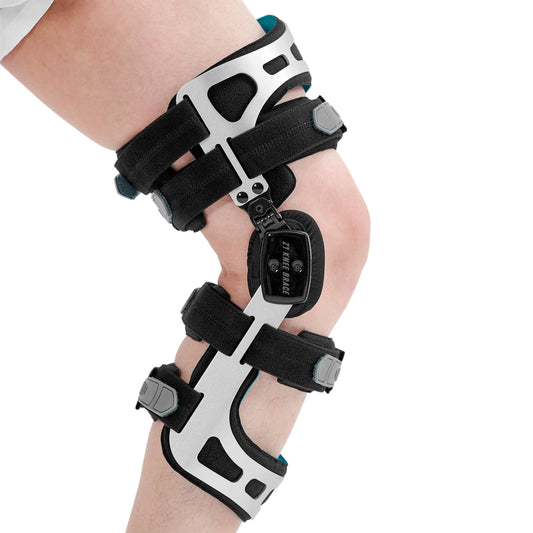
Yes, a hinged knee brace is suitable for many people in the case of arthritis, especially if it is followed by instability, weakness, or discomfort during movement. With this brace, you get side-to-side support with its hinges and it allows the bending and twisting of the knee.
When choosing a hinged knee brace for arthritis, just consider its fit, adjustability, comfort, & intended use.
Does a knee brace work differently on stairs compared with flat surfaces?
Yes, a knee brace can work differently on stairs compared with flat surfaces. While stairs need greater knee bending & puts more pressure on your knee than walking on flat surfaces. For someone with arthritis, a properly fitted brace is required for additional stability during stair climbing and descending.
If your brace feels like slipping, restricting movement, or increasing pain on stairs, check its position & strap tension before continuing.
Can you use the same knee brace for both walking and exercise?
Yes, in some cases the same knee brace can be used for walking & exercise both. But it should be promising & supportive enough for both the activities. A hinged or metal knee brace may be enough for walking as well low-impact activities like - cycling, & light gym workouts.
In some situations, a healthcare professional may recommend two different braces for both the activities. Monitor your comfort level with the brace while performing your activities and also follow the fitting and usage instructions provided by the manufacturer.
Can a knee brace help when arthritis pain gets worse after standing for a long time?
Yes, a knee brace can help in arthritis discomfort that gets worse after standing for a long time. Prolonged standing increases the load & pressure on the knee joint which contributes to knee fatigue and stiffness. A knee brace works to improve stability & reduce stress on the affected area and makes standing & walking more comfortable.
A brace is not the only solution but works as an alternative. Taking short breaks, changing knee positions, using proper footwear, and taking proper exercise can help in reducing knee pain.
When should you consider wearing a knee brace for arthritis?
You may consider wearing a knee brace when you feel difficulty in performing day to day activities because of arthritis. The location and pattern of your arthritis may also decide the kind of knee brace to wear. Another good time to wear the knee brace is when certain activities and movements can increase your knee pain.
You can also take professional guidance if your arthritis pain is getting worse day by day. Your doctor may decide the brace carefully and its design to match your joint mechanics. The overall purpose is to get the proper support for comfortable movement.
Are there any side effects of wearing a knee brace for arthritis?
Some users may experience minor or major side effects from a knee brace like - skin irritation, redness, itching, sweating & pressure marks. If you do have sensitive skin, then you can also feel some issues if the brace rubs against your skin. This can happen if your body adjusts to the support and changes in movement.
If a knee brace causes persistent pain then its fitting should be checked. If the problem continues, then you can consult with a healthcare professional.
Should you wear a knee brace all day for arthritis?
You should not wear a knee brace all day for arthritis. The ideal wearing time depends on your problem, symptoms, and the activities you perform. It is a good idea that you just remove your brace to check your skin & give your knee a break.
If you find that your knee arthritis is severe and you need a brace for the whole day. Then you can consult these symptoms with your doctor to determine your knee brace for your condition.
Should you wear a knee brace before arthritis pain starts or only after pain begins?
A knee brace is not needed to wear after your arthritis pain begins. For certain activities, you can wear your knee brace before performing it like - prolonged standing, climbing and descending stairs, exercise etc. For some people, wearing a knee brace to identify the certain symptoms of pain of arthritis provides support & stability.
If your knee is comfortable during normal activities, you are not needed to wear a knee brace continuously as a precaution.
How do you know when an arthritis knee brace has lost its effectiveness?
A knee brace for arthritis may lose its effectiveness if it no longer provides the same level of comfort, stability, or support that it was supposed to. There are many other reasons to lose the grip of a brace like - loosening of straps, compressing of padding, repeatedly slipping out of position, needing frequent adjustments etc.
If your brace loses its effectiveness, you need to check its fit and condition. Also consider your current needs. If the pain and pressure continues despite proper fitting and adjustment, please consider with your doctor whether you should change your brace or a different type of brace should be used.
Final Thoughts -
Choosing the right knee brace for arthritis is not about finding the most strong one, but it is about finding the most comfortable one. Some people get relief by wearing their knee brace for a full day, while others have to prefer it only for performing their daily activities.It is also needed to pay attention to the fact that how your knee brace stays with the time. Regularly checking the hinges, paddings, straps and other components helps in ensuring that the brace is providing consistent and regular support.
Looking for a knee brace designed for comfort, support, and everyday mobility? Explore Z1 Knee Brace's collection to find an option that fits your needs - https://z1kneebrace.com/collections/knee-brace