Staying Active After 50 - How Knee Braces Support Weak Knees?

After the age of 50, the strength of the knee & joint decreases due to weak ligaments, cartilage wear, reduced muscular mass that support the knee. Reduced physical activity can lead to stress out the muscles around the knee especially the quadriceps & hamstrings. With the passing of age, ligaments also lose their elasticity & strength. This condition is also called “ligament laxity”.
Age-related stiffness also reduces the movement pattern & flexibility of the knee, which is caused by synovial fluid reduction & cartilage wear. Past knee injuries also accelerate the problem of joint degeneration which creates more pain in the knee & instability in old age. The problem of weight gain increases the stress on the joints & the joint pain increases over time.
The decreasing power of recovering tissues, the capacity & mobility of the knee movement becomes more challenging after the age of 50.
Common Signs of Weak Knees in Adults Over 50 -
- Continuous knee pain & discomfort while standing or sitting & climbing stairs.
- Knee joint stiffness in the morning or after a long period of sitting.
- Swelling and inflammation around the knee after daily activities.
- Reduced range of motion which prevents the knee from bending or straightening.
- Cracking & gripping sounds(crepitus) coming from the knee.
- Difficulty getting up from the floor or even a chair.
- Increasing pain in weather changes especially in winter.
- Loss of strength in one or both of the knees.
- Avoiding physical activity due to pain or stiffness.
How Knee Braces Support Weak Knees After 50? -
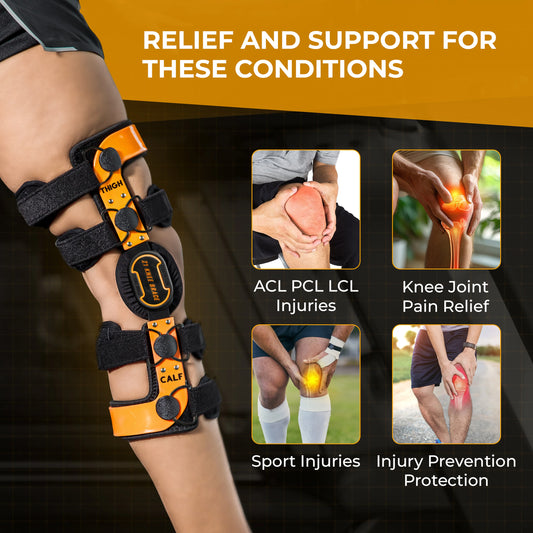
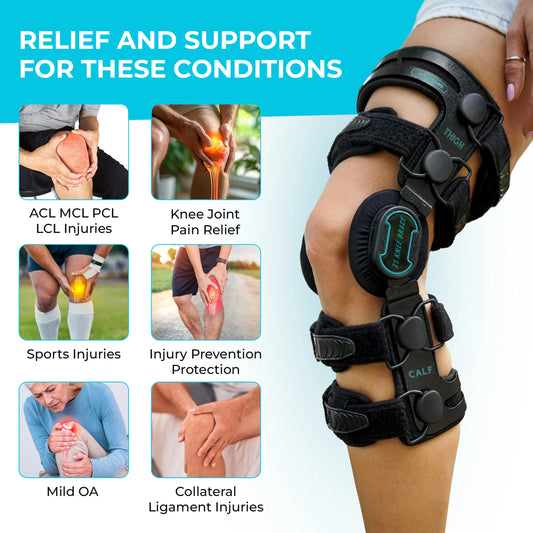
Knee braces are a non-invasive & practical device, which can easily manage your knee pain due to age-related weakness and lead a painfree life after 50. Here is how knee braces support weak knees after the age of 50 -- Supports weak ligaments by improving knee stability.
- Reduces the risk of sudden knee buckling.
- Distributes the extra pressure from the knee joint & reduces pain & strain.
- Limits harmful movements which can increase further damage.
- Provides gentle compression to remove inflammation & swelling.
- Supports aging muscles that are no more capable of protecting the knee.
- Encourage continued mobility during performing daily activities.
- Helps in increasing mobility while walking, weight-lifting & climbing stairs.
Activities Where Knee Braces Are Most Helpful After the Age of 50 -
- Jogging, walking and reducing joint stress at this time.
- Getting up from a chair or bed.
- Climbing stairs to support weak joint ligaments.
- Brisk walking to absorb impact and control movement.
- Recreational activities like - dancing & casual sports.
- During travel & sightseeing to reduce knee fatigue.
- To stop frequent bending and squatting around the knee while gardening.
- Low impact workouts, physiotherapy & yoga sessions.
- Normal householding tasks like - cleaning & cooking.
When a Knee Brace May Not Be Enough?
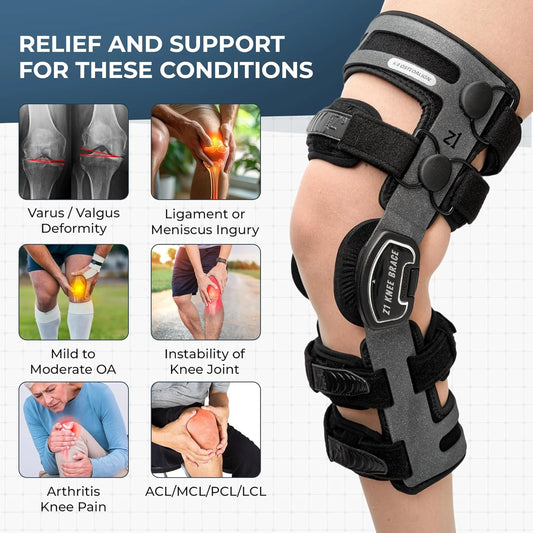
After the age of 50, knee problems are linked to joint-degeneration, cartilage wear, & muscular weakness. The joint lubrication starts to decrease and cartilage becomes thin & less resilient. If knee discomfort persists using a brace, you can consider these following steps -- Consult an orthopedic surgeon & physiotherapist to identify the exact cause like - osteoarthritis, ligament degeneration, meniscus damage. X-rays and MRI scans may be recommended.
- Strengthening the calf, hamstrings, & quadriceps reduces pressure on the knee joint. Guided physiotherapy is needed for the proper knee stability.
- You may need to focus on the proper weight management of your body. Loss of significant weight can lower the amount of stress on your knee.
- Use supportive footwear and take regular breaks for the long period of standing or walking.
- You are also needed to mix the knee bracing with anti-inflammatory medications, joint supplements, heat & cold therapy, & injections for joint pain etc.
Types of Knee Braces Suitable for People Over 50 -
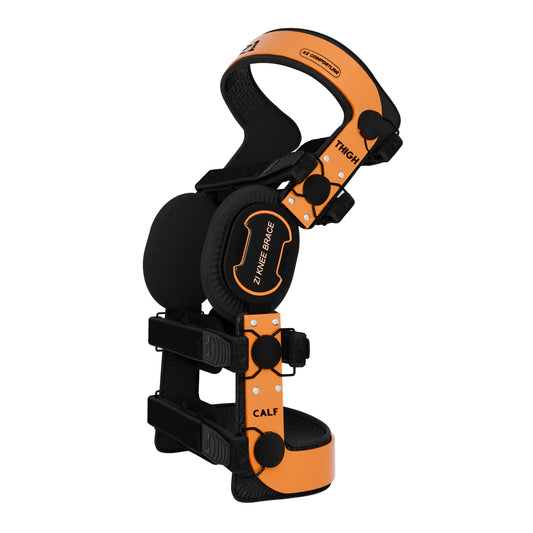
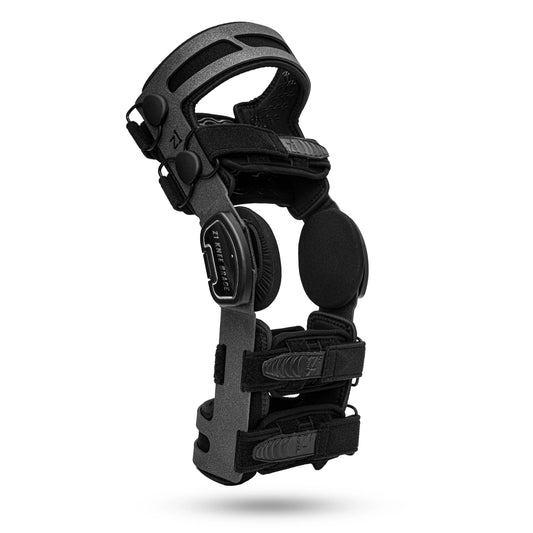
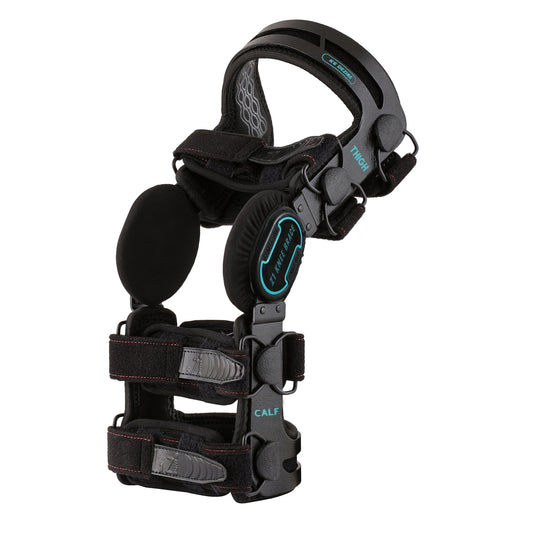
Here’s a detailed guide to the types of knee braces that are particularly suitable for this age group -Hinged Knee Brace -
These braces include rigid side support & control side-by-side movement & support ligament. These braces offer added protection without excessive bulk. For people over the age of 50, who experience knee pain & mild ligament issues, hinged knee braces are ideal for them.
Offloader/Unloader Knee Brace -
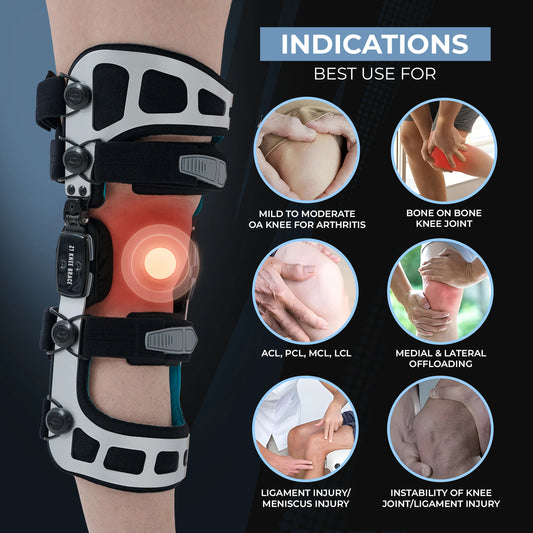
These knee braces are specialised devices for distributing the extra weight from the affected part of the knee. For the age above 50, these braces are good for unicompartmental knee pain. It also provides effective results from arthritis.
Post-Surgical/Recovery Knee Braces -
These braces are the most supportive solution for protecting healing tissues & control range of motion after knee surgery. They are mostly part of a structured recovery plan. It is a good solution for meniscus repair, ligament reconstruction, & knee replacement.
Metal Knee Brace -
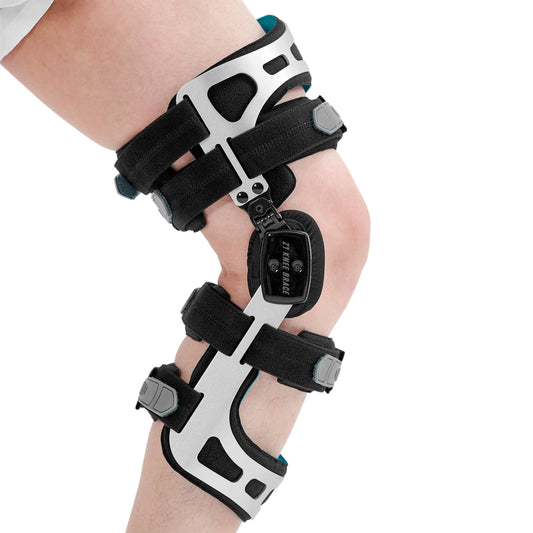
These solid knee braces are good for individuals over the age of 50 who want firm control on knee pain. They are good for knee problems like - severe instability, advanced arthritis, or structural weakness.
Frequently Asked Questions -
Is it safe to wear a knee brace every day after the age of 50?Yes, wearing a knee brace daily is generally safe when used correctly. A properly fitted brace supports the knee without restricting blood flow or movement. However, it should be used as support - not as a replacement for strengthening exercises or medical advice.
Can knee braces reduce knee pain caused by age-related wear and tear?
Knee braces can help reduce pain caused by age-related knee weakness by stabilizing the joint and redistributing pressure. This support can make activities like walking, climbing stairs, or light exercise more comfortable.
Should knee braces be used along with exercise after 50?
Absolutely. Knee braces work best when combined with low-impact exercises, proper footwear, and a healthy lifestyle. While the brace provides support, exercises help strengthen the muscles around the knee for long-term joint health.
Will using a knee brace make my knees weaker over time?
No, using a knee brace does not make your knees weaker when used correctly. A knee brace provides external support while you stay active, but it should be paired with regular movement and strengthening exercises to maintain muscle strength around the knee.
Are knee braces suitable for low-impact activities like yoga or morning walks?
Yes, many lightweight and flexible knee braces are designed specifically for low-impact activities. They offer gentle support without limiting movement, making them suitable for yoga, stretching, morning walks, and light household activities.
Final Thoughts -
After the age of 50, it is essential to maintain independence, joint health, & well-being because they allow the individuals to continue their daily activities with more comfort. Knee braces help in improving alignment, providing gentle compression & warmth to limit all kinds of knee problems.One problem is seen in the people over the age of 50 that they fear from performing their daily activities and it can make it worse over time. Knee braces provide the essential support & confidence to encourage you for consistent movement.
Mixing knee braces and other key mediums for knee health mediums can provide effective results. Regular exercises, proper footwear, proper medical guidance are a very effective medium to be connected with knee braces. For adults over 50, this strategy makes it easier to stay active & confident in their daily life.